How to Automate Your Entire Lead-to-Invoice Pipeline Without Writing a Single Line of Code
By Zapier16 min read
I have only one link candidate, so I'll insert it once where it fits most naturally.
To automate your lead-to-invoice pipeline without code, connect your lead capture form, CRM, proposal tool, and invoicing app using a no-code automation platform like Zapier. Map each handoff point as a trigger-action pair: new lead triggers CRM entry, deal won triggers invoice creation. Most teams fully automate this in under a day.
Published: March 8, 2026 | Last Updated: March 8, 2026
What a Fully Automated Lead-to-Invoice Pipeline Actually Looks Like
Most small teams lose time not in the work itself, but in the gaps between tools. A lead fills out a form. Someone copies it into the CRM. Someone else sends a follow-up email. Days later, a proposal gets drafted manually. The deal closes, and the invoice sits unsent for another 48 hours. Each gap is small. Together, they drain your week.
No-code platforms eliminate these gaps by letting you create automated workflows that connect multiple applications through a simple trigger-action chain. No API knowledge required. No developer. You define the rule once, and the system executes it every time.
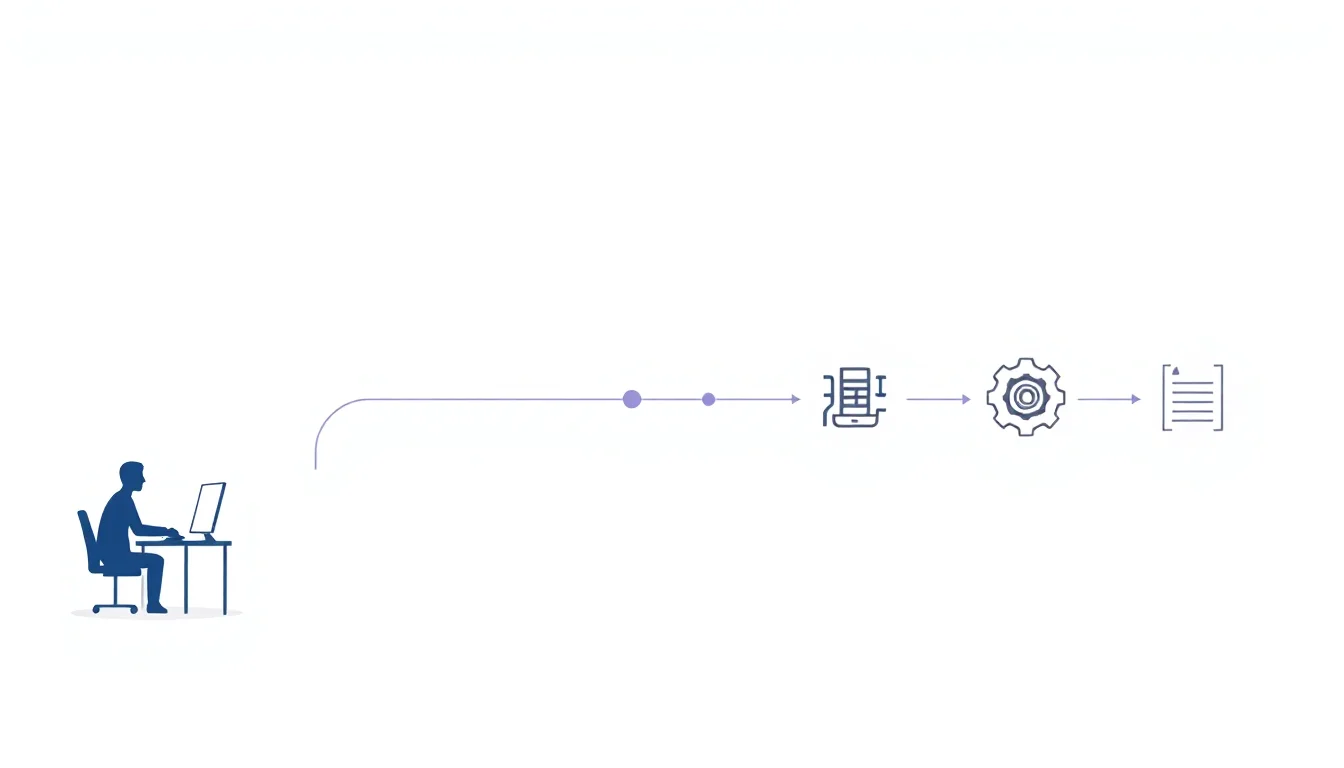
Here's a concrete end-to-end example: A prospect clicks a Facebook Lead Ad. That submission instantly creates a contact in HubSpot, fires a personalized welcome email via Gmail, and adds a row to a Google Sheet for visibility. Three days later, a CRM tag change triggers PandaDoc to send a pre-filled proposal. The prospect signs electronically. That signature event updates the CRM deal to "Closed Won" and creates an invoice in QuickBooks, automatically. When the invoice is paid, a Slack message fires and an onboarding Zap kicks off. Zero manual steps. Zero copy-pasting.
This is not a fantasy. It is a standard Zapier workflow configuration any non-technical founder can build.
The Five Pipeline Stages You Need to Automate
Every service business pipeline, regardless of industry, moves through five stages where automation can eliminate manual work:
Stage 1: Lead Capture. Form submissions, Facebook Lead Ads, inbound emails, and chatbot conversations all feed leads into your system. The system captures leads from websites, social media, live chat, and offline sources without manual data entry, the moment they arrive. No human has to check a form dashboard or copy an email into a spreadsheet.
Stage 2: Lead Qualification and Routing. Once a lead is in your CRM, automated lead routing assigns it to the right owner, applies tags, and scores it based on form fields or behavior. This is where AI-powered lead scoring becomes a real differentiator (more on that below).
Stage 3: Proposal and Nurture. CRM status changes trigger proposal generation or drip sequences automatically. No chasing. No forgotten follow-ups.
Stage 4: Contract and Close. An e-signature event fires a CRM deal-won update. The system closes the loop without anyone touching a keyboard.
Stage 5: Invoice and Payment. The closed deal automatically generates and sends the invoice. Two thirds of invoices are paid late at small businesses (smeweb.com), and one proven way to reduce that number is to send the invoice faster. Automation removes the delay entirely.
Where Manual Work Actually Hides in Your Pipeline
Data re-entry between disconnected tools is the single biggest time sink. You already know this. But the second-biggest killer is subtler: forgotten follow-ups that live in someone's head, not in a system. When you're running a 5-person team and wearing four hats, a lead that doesn't get followed up within 24 hours often never gets followed up at all.
Invoice delays are equally damaging. When invoice creation is manual, it routinely happens days after a deal closes, not hours. That delay compounds into cash flow problems. Duplicate contact records, created when leads come from multiple channels with no deduplication logic, add noise that erodes your CRM's reliability over time.
Pipeline management automation fixes all of this at the system level, not the willpower level.
Choosing the Right No-Code Tools for Each Pipeline Stage
The best tool stack is the one built around what you already use. Zapier's value as the connective tissue in your app stack is precisely that it meets you where you are.
Lead capture layer: Typeform, Tally (free), Facebook Lead Ads, or website chat widgets like Intercom.
CRM layer: HubSpot Free CRM is the default starting point for small teams. Pipedrive works well for sales-heavy workflows. Airtable functions as a lightweight CRM if your needs are simple.
Communication layer: Gmail or Outlook for transactional emails. ActiveCampaign or Mailchimp for automated drip sequences and email nurture.
Proposal and e-sign layer: PandaDoc integrates cleanly with both CRMs and Zapier. HelloSign and DocuSign are strong alternatives.
Invoicing layer: QuickBooks and FreshBooks are the most common. Stripe works well if your business takes upfront payments. Wave is free and Zapier-compatible for budget-conscious teams.
Automation backbone: Zapier connects all of the above. At Zapier, we've seen teams automate the equivalent of a part-time hire's workload, saving 100+ hours a month (lowcode.agency), by simply chaining together the tools they already paid for.
Recommended Tool Stack for Solo Founders and Small Teams
Budget-conscious stack: Tally (free) + HubSpot Free CRM + Gmail + HelloSign + Wave. Total monthly cost: near zero, depending on volume.
Growth stack: Typeform + Pipedrive + ActiveCampaign + PandaDoc + QuickBooks. This stack handles more sophisticated lead qualification and multi-step nurture sequences.
The key rule: always choose tools with native Zapier integrations. Workarounds using webhooks add friction and fragility. Native integrations are tested, documented, and faster to configure.
When to Use Zapier vs. a Tool's Native Automation
Native automation inside a single tool, like HubSpot workflows, is the right choice for internal logic that never leaves that tool. A deal stage change that triggers an internal task assignment stays inside HubSpot.
Use Zapier the moment data needs to cross a tool boundary. CRM deal won triggers an invoice in QuickBooks. Stripe payment confirmation updates a contact record in your CRM. That cross-app workflow automation is exactly what Zapier is built for, and no single tool can replicate it.
Step-by-Step: Building Your Automated Lead-to-Invoice Zaps
Build one Zap at a time. Trying to construct the entire pipeline in a single session leads to confusion and poorly mapped fields. Start with lead capture. Get it working. Then move to the next handoff.
Zap 1: Automating Lead Capture and CRM Entry
Trigger: New submission in Typeform, Tally, or Facebook Lead Ads.
Action 1: Create or update contact in HubSpot or Pipedrive. Map every form field explicitly. First name, last name, email, company, and any custom fields you need for qualification.
Action 2: Send a personalized acknowledgment email via Gmail within seconds of submission. Speed matters here. Automated follow-up that fires in under 5 minutes dramatically outperforms a manual reply sent hours later.
Action 3 (optional): Post lead details to a dedicated Slack channel for team visibility.
Critical step: Use Zapier's "Find or Create" CRM action rather than a plain "Create" action. This single change prevents duplicate contacts when the same person submits your form more than once, a common issue in lead capture automation.
Zap 2: Automating Proposals When a Lead Is Qualified
This is where most pipelines stall. A lead is qualified in the CRM, but no one gets around to sending the proposal for two days.
Trigger: CRM deal stage changes to "Qualified" or a specific tag is applied to the contact.
Action: Create and send a pre-filled proposal in PandaDoc using CRM contact data. Name, company, service details, and deal value pull in automatically.
Filter step: Add a Zapier filter to only trigger this Zap for deals above a minimum threshold. This prevents your proposal tool from firing for low-value inquiries that don't justify a formal proposal. This is the conditional logic that replaces code-based decision trees.
Follow-up task: Create a CRM task automatically if the proposal is not signed within 48 hours. The system reminds you so the lead doesn't fall silent.
Custom lead qualification workflows built this way, using CRM tags and Zapier filters, outperform generic drip sequences because they respond to actual deal signals rather than arbitrary time delays. The trade-off is setup time: you need to define your qualification criteria clearly before you automate them. Automate a bad process and you get bad results faster.
Zap 3 and 4: Automating Invoice Creation and Payment Confirmation
This is the most underbuilt part of most small business pipelines. Teams automate lead capture and email but leave invoice creation entirely manual. The result is a bottleneck right at the revenue moment.
Trigger (Zap 3): E-signature completed event from DocuSign, HelloSign, or PandaDoc.
Action 1: Update CRM deal to "Closed Won" with close date and deal value populated from the signing event.
Action 2: Create and send invoice in QuickBooks or FreshBooks using the deal data from your CRM. No copy-pasting. No manual entry. The invoice goes out the same minute the contract is signed.
Trigger (Zap 4): Invoice marked as paid in QuickBooks or Stripe.
Actions: Notify your internal Slack channel, update the CRM contact to "Customer," and fire your onboarding workflow. The entire revenue cycle closes automatically.
The invoice automation gap is real. Delayed invoices mean delayed payments. With two thirds of small business invoices paid late (smeweb.com), removing even 24 hours from the invoice delivery cycle has a measurable cash flow impact.
Keeping Your Pipeline Automations Reliable and Error-Free
This section is where most automation guides go silent. They tell you to build the workflows. They don't tell you what happens when those workflows break.
Breaks happen. A tool updates its API. A field name changes. A required field is left blank by a form submitter. The question is not whether your Zaps will fail occasionally. The question is whether you find out before or after a lead falls through the cracks.
Setting Up Error Alerts and Monitoring for Your Zaps
Turn on Zapier email alerts for every Zap that sits on the revenue path: lead capture, proposal sending, invoice creation. These are the ones where a silent failure costs money.
Create a dedicated Slack channel for Zap error notifications. Route all Zapier error alerts there. When a Zap fails, you see it immediately instead of discovering it three days later when a client asks why they never received an invoice.
Use Zapier's "Paths" feature to handle exceptions gracefully. Instead of letting a Zap fail when a deal value field is empty, build a path that catches the exception and sends a Slack alert asking someone to review the record manually. This is the difference between automation that breaks silently and automation that fails loudly and constructively.
Review Task History weekly for the first month after launch. Field mapping issues are common early on, particularly when form fields or CRM properties are renamed. A weekly 15-minute audit catches these before they become systemic.
Business process automation is not a one-time setup. It requires light maintenance. The payoff is still massive, but treat your Zaps like a system, not a fire-and-forget script.
What to Do When Your Workflow Outgrows Basic Automation
Multi-step Zaps with filters, paths, and formatters handle the vast majority of complex logic without any code. When you genuinely hit a ceiling, Zapier's Code step accepts JavaScript or Python for truly custom transformations. Most teams never need it.
AI-powered lead scoring and routing is increasingly accessible without custom code. Tools like Default consolidate routing logic across your stack, and Zapier's built-in AI steps can classify or score incoming leads based on field values before routing them to the right CRM owner or sequence. The practical approach is to start with rule-based scoring in your CRM, then layer in AI scoring once your lead volume justifies the configuration time.
Measuring the ROI of Your Automated Lead-to-Invoice Pipeline
Time saved is the most immediate return. Track hours spent on pipeline admin tasks before automation by logging them for one week. Compare that number to your post-automation baseline at 30 and 90 days.
A Simple Automation ROI Calculator for Small Teams
The formula is straightforward:
(Hours saved per week × your hourly rate × 52) − annual Zapier cost = annual ROI
Consider a realistic scenario: assume a solo founder saves 7 hours per week on lead routing, follow-up emails, and invoice creation. The math is not close.
Beyond time, factor in three harder-to-quantify gains. First, reduced errors from eliminated manual data entry. Second, faster cash flow from same-day invoice delivery instead of 48-hour delays. Third, capacity to take on more clients without hiring, because your small team operations now run on systems instead of individual effort.
Use a simple Google Sheet to log every task you automate and your estimated time per task. Review it monthly. The accumulation is motivating and gives you a defensible number if you ever need to justify the subscription cost.
Results speak louder. One workflow. One less manual task. That is how every reliable pipeline starts.
Frequently Asked Questions
How long does it take to set up a fully automated lead-to-invoice pipeline with Zapier?
Most non-technical founders build a functional lead-to-invoice pipeline in one focused workday. Start with lead capture and CRM entry (30 minutes), then add proposal and invoice Zaps sequentially. Testing each Zap with real sample data adds time but prevents errors. A complete four-Zap pipeline typically takes 4 to 8 hours total.
Do I need any technical skills or coding knowledge to automate my pipeline with Zapier?
No coding knowledge is required. Zapier's interface is entirely visual: you select a trigger app, choose a trigger event, select an action app, and map fields using dropdown menus. The only skill required is knowing what data you want to move between tools. If you can use a spreadsheet, you can build a Zap.
What happens if a Zap breaks—will I lose leads or miss sending an invoice?
Zapier retries failed tasks automatically and stores them in Task History so you can replay them once the issue is resolved. Enable email error alerts for revenue-critical Zaps. Build backup CRM tasks as a safety net for invoice and proposal Zaps. A broken Zap does not delete data; it pauses the action until the error is fixed and the task is replayed.
Can I automate my pipeline if my tools aren't all on Zapier's integration list?
Zapier supports thousands of apps, but if a specific tool lacks a native integration, use its webhook or REST API endpoint as a custom trigger or action inside Zapier. Most modern SaaS tools support webhooks even without a listed Zapier app. Alternatively, connect the tool through an intermediary like Google Sheets, which almost every tool can export to natively.
Is Zapier worth the cost for a solo founder or very small team?
Yes, for most service-based solo founders. Consider this calculation: assume you recover just 5 hours per week from automated lead routing and invoice creation. At a $60 hourly rate, that is over $15,000 in recovered time annually. Zapier's starter plans cost a fraction of that. The ROI threshold is low enough that even partial automation pays for the subscription within the first month.
What is the best free or low-cost tool stack for automating a small business pipeline?
A strong zero-to-low-cost stack: Tally (free form builder) connected to HubSpot Free CRM via Zapier, with Gmail handling automated emails, HelloSign for e-signatures, and Wave for invoicing. Total tool cost is near zero. Zapier's free plan covers basic single-step Zaps; the starter paid plan unlocks multi-step Zaps needed for a full pipeline automation.
How do I prevent duplicate contacts or records when automating lead capture into my CRM?
Use Zapier's "Find or Create" action instead of a plain "Create Contact" action in your CRM step. This searches for an existing record matching the email address before creating a new one. If a match exists, it updates the record. If not, it creates a new one. This single configuration change eliminates the majority of duplicate record problems in lead capture automation.
Can Zapier handle conditional logic, like only sending a proposal if a deal is above a certain value?
Yes. Zapier's Filter step lets you set conditions that must be true before the workflow continues. Add a filter after your CRM trigger that checks the deal value field and only proceeds if the value exceeds your threshold. Zapier's Paths feature extends this further, letting you branch into different action sequences based on multiple conditions simultaneously, all without writing code.
What are the best no-code CRM builders for automating lead capture to follow-up emails?
HubSpot Free CRM is the most capable no-code option with built-in email sequences and Zapier integration. Pipedrive suits sales-focused workflows with strong pipeline visualization. Airtable works as a lightweight CRM when paired with Zapier for automation. For teams wanting everything in one place, Notion databases connected via Zapier offer flexibility. Choose based on your existing tool ecosystem, not on feature lists alone.
How can I integrate AI-powered lead scoring and routing into my existing CRM?
The practical path is to start with rule-based scoring in your CRM using field values like company size, industry, or budget range. Then add Zapier's built-in AI steps to classify or enrich leads before they reach the CRM. Tools like Default consolidate routing logic and scoring across your entire stack. Layer AI scoring on top of your existing CRM integration once your lead volume justifies the setup time.
Are there any no-code tools that offer customizable sales pipelines and automated email workflows?
HubSpot, Pipedrive, and ActiveCampaign all offer customizable pipeline stages and native email automation in one platform. For teams that prefer composing a stack, pairing Airtable or Notion as a pipeline with ActiveCampaign for email and Zapier as the connector gives maximum flexibility. The best choice depends on whether you want an all-in-one tool or a composable setup you control fully.
Can I use Zapier to automate my entire lead management process without coding?
Yes. Zapier handles every stage of lead management without code: capturing leads from forms and ads, creating and updating CRM records, sending follow-up emails, routing leads to owners, triggering proposals, and updating deal status after signatures. Multi-step Zaps with filters and paths cover conditional logic. For the vast majority of small business workflows, no code is ever needed.
What are the key features of Activepieces that make it suitable for no-code automation?
Activepieces is an open-source no-code automation platform with a visual flow builder, self-hosting capability, and a growing library of app connectors. Its key differentiators are the ability to host it on your own infrastructure for data privacy, branching and conditional logic without code, and a free tier with no task limits on self-hosted deployments. It suits technical-leaning founders who want Zapier-style automation with full data control.
Sources & References
About the Author
Zapier
Zapier is a no-code automation platform empowering solo founders and small teams to connect apps, eliminate repetitive tasks, and scale operations efficiently without expanding headcount.
Learn more at zapier.com →Related Posts
How to Set Up a Zapier AI Chatbot for Customer Support in Under an Hour
A Zapier AI chatbot can handle common customer support questions 24/7 without adding headcount. This step-by-step guide walks solo founders and small ops teams through the complete setup process—from connecting your first app to testing your first automated response—in under 60 minutes.
16 min read
The Lean Ops Stack: 7 Tools That Work Seamlessly With Zapier to Run a $1M Business With No Operations Hire
Running a $1M business without an operations hire isn't a fantasy—it's an architecture decision. This post breaks down 7 tools that connect natively with Zapier to automate lead routing, invoicing, customer support, and more, so your business runs itself while you focus on growth.
15 min read

Zapier vs Make vs Power Automate in 2026: Which No-Code Automation Platform Is Right for a 1–10 Person Team?
Choosing the wrong automation platform costs small teams real time and money. This hands-on comparison breaks down Zapier, Make, and Microsoft Power Automate across pricing, ease of use, AI capabilities, and reliability—so a 1–10 person team can make a confident, informed decision in 2026.
16 min read