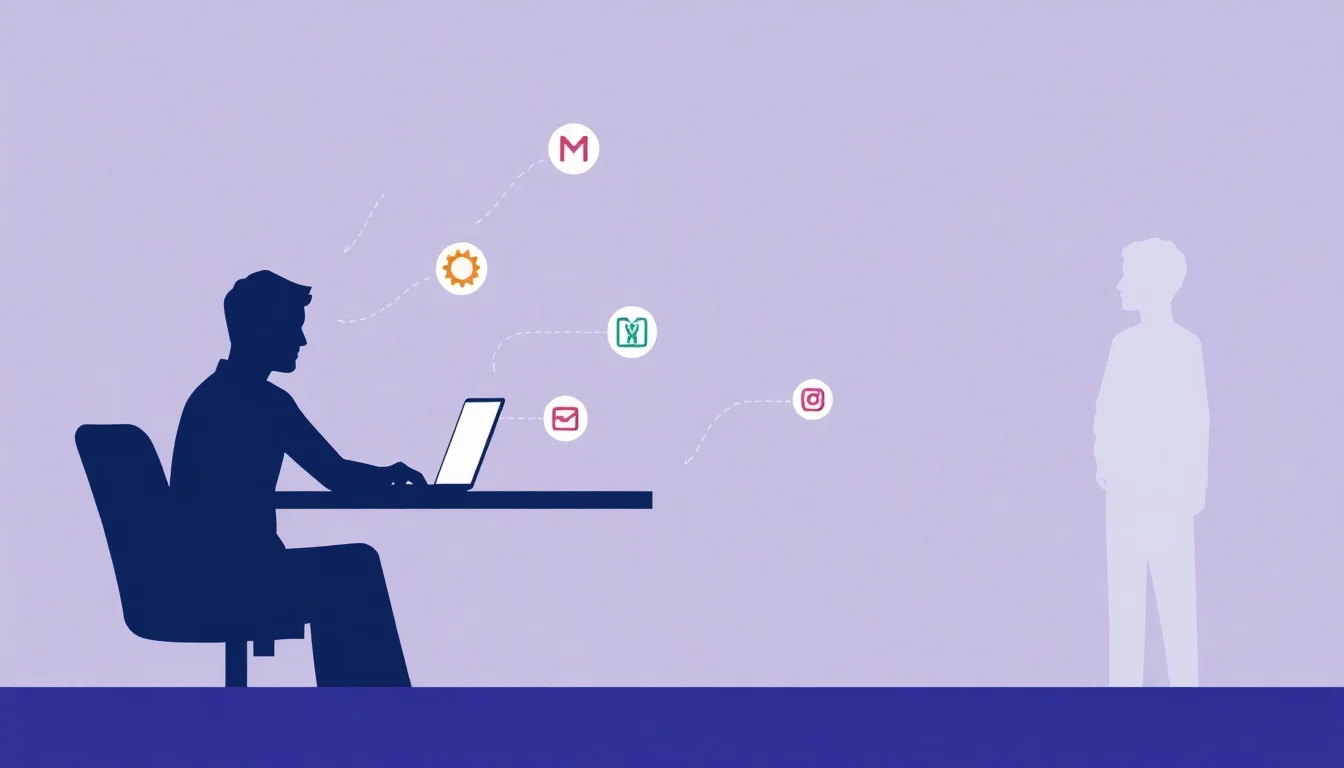
Hire vs. Automate: When a $50/Month Tool Replaces a $60K/Year Operations Hire
By Zapier13 min read
I have only one candidate URL to work with, so I'll insert it once where it fits most naturally, then return the full content.
Reserve hiring for work requiring human context, client relationships, or complex problem-solving that no workflow can replicate.
Published: March 8, 2026 | Last Updated: March 8, 2026
The Real Cost of an Operations Hire vs. an Automation Platform
Most founders anchor on base salary when evaluating an ops hire. That's the wrong number. A $60K/year operations coordinator balloons to $75K–$90K once you layer in FICA taxes (~7.65%), employer health insurance contributions, 401(k) match, paid leave, equipment, and the cost of an HR software seat (nationalbusiness.org).
Automation platforms operate on a different economic planet entirely.
Time-to-value is equally lopsided. A new hire takes 30–90 days to reach full productivity. An automation workflow deploys in hours.
Breaking Down the True Fully-Loaded Cost of an Ops Hire
The rest disappears into line items founders often miss: unemployment insurance, workers' compensation, employer-paid FICA, benefits administration overhead, and the real cost of your own time managing and onboarding the person.
There's also the productivity ramp. During the first 60–90 days, you're paying a full salary while capturing a fraction of the output you eventually expect. For a 10-person team, that gap is painful.
What $50/Month Actually Gets You in Automation Coverage
Mid-tier automation plans support multi-step Zaps, filters, conditional logic, and app integrations across thousands of tools simultaneously. One platform replaces manual work across your CRM, email platform, invoicing tool, project management system, and spreadsheets at the same time.
Unlike a hire, the tool runs 24/7 without sick days, context-switching costs, or knowledge gaps when someone quits. Knowledge workers juggle between 9 and 12 different software applications daily, creating constant micro-interruptions (creativebits.us). Automation eliminates the friction of moving data between those tools entirely.
Which Operations Tasks Automation Handles Better Than a Human
Small teams see the biggest gains from automation without full-time hires, and the reason is structural. When you have 3–10 people, every hour of manual, rule-based work is an hour your highest-leverage people aren't spending on growth.
Manual data entry alone costs American companies more than $28,000 per employee each year (prnewswire.com). For a small team without an ops person, that cost lands directly on the founder or the team member least suited to carry it.
Task-switching makes it worse. According to the American Psychological Association, task-switching can reduce productive time by up to 40 percent (creativebits.us). And when an interruption breaks concentration, it takes approximately 23 minutes to return to the original task (creativebits.us). Automate repetitive tasks and you eliminate the switching entirely.
The Automation-Ready Task Checklist
A task qualifies for automation if it clears three criteria: it's triggered by a consistent event, it follows a predictable set of rules, and it doesn't require contextual judgment to complete. New form submission creates a CRM contact, assigns it to a rep, and sends a welcome email. That's three steps, zero ambiguity, and zero reason for a human to touch it.
The test is simple. Ask: "Could I write this as an IF/THEN statement without exceptions?" If yes, automate it. Lead routing automation, CRM automation, and automated data entry all pass this test cleanly.
App Sprawl: The Problem Automation Solves That Hiring Doesn't
Here's the uncomfortable truth about app sprawl. Hiring an ops person to manually bridge disconnected tools doesn't solve the underlying problem. It pays a human to do something a system should do. The 2023 Anatomy of Work Report found that 58 percent of employees spend more time switching between apps than performing meaningful work (creativebits.us).
An automation platform creates a persistent, error-free connective layer across your entire stack. No-code automation removes the need for a developer. It doesn't get tired, distracted, or frustrated by repetitive work. That's a structural advantage a hire can't replicate.
When You Actually Need to Hire an Operations Person
Automation has a ceiling. Know where it is.
Vendor negotiations, escalation handling, and relationship-sensitive communications require human judgment that no operations workflow can provide. If your ops bottleneck is ambiguity, not volume, hire before you automate. Complex, one-off problem-solving like building a new fulfillment process from scratch, or managing a difficult client relationship, needs a strategic thinker. A trigger-action system cannot make that call.
Y Combinator-backed automation startups have pushed hard into the SMB market, and the honest positioning from the best of them is consistent: these tools complement human roles, they don't eliminate them. The administrative role evolves. Ops people who once spent their days as human data bridges between tools now function as orchestrators of workflows, managing exceptions, improving systems, and handling the judgment-heavy decisions that automation surfaces but can't resolve. That's a more valuable role, and it's worth hiring for once your automation stack is in place.
The Judgment-vs-Rules Test for Every Ops Task
Before assigning any task to a tool or a person, run it through one question: "Could I give a complete stranger a written rulebook and expect them to do this correctly every time?" If yes, automate.
The best approach is often hybrid. Automate the triggering and routing step, hire a person to handle only the judgment-heavy resolution. This keeps headcount lean while ensuring nothing falls through the cracks.
Signs Your Business Has Outgrown Automation-Only Ops
Your automations are running correctly but strategic decisions are still bottlenecked at you. You're managing 10+ Zaps and spending hours debugging edge cases. Customer complaints trace back to gaps that require contextual awareness, not better triggers. These are signals. They mean automation has done its job and a human is now the right next investment.
The Automate-First Decision Framework for Solo Founders and Small Teams
The automate-first framework prevents that.
Step 1. Audit your ops workload for one week. Log every task and flag each as rule-based or judgment-based. Be honest.
Step 2. Estimate weekly hours lost to rule-based tasks. Multiply by your effective hourly rate. Harvard Business Review reports that excessive task-switching costs companies nearly $10,000 per employee annually in lost productivity (creativebits.us). The math usually surprises founders.
Step 3. Map rule-based tasks to automatable triggers. Most map cleanly to standard app integrations and multi-step Zap patterns.
Step 4. Build your first automation for the highest-volume, most repetitive task. Measure time saved over 30 days.
Step 5. Only begin a hiring search after your automation stack is optimized. At that point, you can articulate precisely what a human adds that the tools cannot.
How to Quantify Your Automation ROI Before You Build Anything
The automation ROI formula is direct: (hours saved per week × your effective hourly rate × 52) minus annual tool cost equals first-year return. Consider a concrete example: you run a 6-person e-commerce operation and your team manually copies lead industry research, then sends a follow-up email sequence. That process takes 8 hours per week across the team. Using Zapier templates, you automate the entire sequence in an afternoon. The payback period is measured in days, not months.
Even at a conservative 3 hours saved per week, most small business automation stacks return their annual cost in under two weeks of operation.
Building Your First Automation Stack: Priority Order
Start with lead capture and CRM sync. Highest frequency, most error-prone when manual, and directly revenue-adjacent. Add notification and follow-up triggers second. These prevent revenue from falling through the cracks on active deals. Layer in reporting and data aggregation last. Valuable, but lower urgency than workflows that directly affect whether customers get a timely response.
Common Objections to Automating Instead of Hiring
Every objection to automation deserves a direct answer, not a dismissal.
"Automations will break silently." This is the most legitimate concern, and it's solvable. Enable error notifications so failures surface via email or Slack within minutes. Build a weekly habit: check task history logs for failed runs from the past 7 days. Add a human-readable log step to critical Zaps so you have a paper trail. Silent failures happen when nobody builds monitoring. Build monitoring.
"My workflows are too complex for no-code tools." Modern automation platforms handle multi-step, conditional, and branching logic that covers the vast majority of SMB operations workflows. Most platforms also support webhook calls, API requests, and embedded code steps that extend capabilities well beyond basic triggers. The ceiling of no-code automation is higher than most founders realize.
"Initial setup will overwhelm me." This concern is real and worth addressing honestly. Setting up automation well requires documenting your workflows before you build anything. Non-technical owners often underestimate this step. The fix is to start with Zapier templates for the 50 most common workflows rather than building from scratch. Many deploy in under an hour. The documentation you create in the process also becomes the operational backbone that makes future hires faster and cheaper.
"The ROI isn't clear at my scale." For businesses with 1–25 employees, every hour recovered is disproportionately valuable because the work falls on your most expensive people. Scale without hiring is only possible if you stop doing manually what a system can do reliably.
How to Prevent Silent Automation Failures
Enable error notifications first. Then build a simple weekly audit: check task history logs for failed runs and scan for any tasks that stopped executing without an explicit error. For high-stakes workflows, like invoice generation or client onboarding sequences, add a confirmation step that drops a log entry into a spreadsheet or sends a summary Slack message. You want a paper trail, not a black box.
When No-Code Hits Its Limit: Practical Escalation Options
Hit the ceiling of no-code before you default to headcount. Most founders never reach it.
Frequently Asked Questions
At what company size does it make more sense to hire an ops person than to automate?
For most businesses, automating first makes sense at any size under 25 employees. A dedicated operations hire typically becomes justified when your automation stack is fully built, you've recovered all automatable hours, and you still have a growing volume of judgment-heavy decisions that only a human can resolve. That threshold usually appears between 15 and 30 employees, depending on your industry.
What types of operations tasks can automation tools like Zapier realistically handle end-to-end?
Automation handles any rule-based, trigger-driven workflow without human intervention. This includes lead capture and CRM entry, follow-up email sequences, Slack notifications based on pipeline changes, invoice generation, cross-app data syncing, new customer onboarding sequences, and recurring report delivery. If the task follows an IF/THEN pattern without contextual exceptions, it qualifies for full automation end-to-end.
How long does it take to set up a basic automation workflow for a small business?
A basic single-trigger workflow using a pre-built Zapier template deploys in 15–60 minutes. A multi-step Zap with conditional logic and filters typically takes 2–4 hours to build, test, and activate. More complex operations workflows with multiple branches, error handling, and custom logic may require a full day or a brief engagement with a freelance automation specialist.
What happens when an automation breaks—how do I know and how do I fix it?
Zapier sends error notifications by email when a Zap fails. The task history log shows every run, success, and failure with a detailed error message. Most failures trace to a changed field name, a disconnected app credential, or a missing required input. Fixing typically means reconnecting the app, updating the field mapping, and re-running the failed task from the history log.
Can automation tools handle complex, multi-step workflows or only simple one-trigger actions?
Modern automation platforms handle sophisticated multi-step workflows with filters, conditional paths, delays, loops, and branching logic. Zapier supports multi-step Zaps that chain actions across dozens of apps, apply conditional logic at each step, and handle different outcomes based on data values. For edge cases beyond no-code, webhook and API steps extend capabilities without requiring a developer.
Is it possible to automate operations without any coding or technical background?
Yes. No-code automation platforms are explicitly designed for non-technical users. Zapier's template library covers the most common workflows with pre-built configurations that require only connecting your apps and mapping fields. Most small business owners with no technical background build functional automation stacks within their first week. The main prerequisite is being able to describe your workflow in plain English.
What is the actual ROI of automation for a business with fewer than 10 employees?
The ROI is disproportionately high at small team sizes because manual work falls on your most expensive people. Manual data entry alone costs businesses more than $28,000 per employee annually ([prnewswire.com](https://www.prnewswire.com/news-releases/survey-manual-data-entry-costs-american-companies-more-than-28-000-per-employee-each-year-302516867.html)). Even recovering 3 hours per week per person at a $75/hour effective rate generates thousands in annual value against a tool cost measured in hundreds of dollars. Most small business automation stacks pay back their cost within two weeks.
Should I automate first and hire later, or hire someone to build my automations for me?
Automate first using templates and the platform's built-in tools. For standard workflows, no specialist is needed. If you hit genuine complexity limits, engage a freelance automation consultant for a one-time build. Only hire full-time operations staff after your automation stack is in place and you can clearly define what human judgment adds that the tools cannot. This sequence prevents expensive hiring decisions made prematurely.
What are the main benefits of automating operations in a small business?
Automation eliminates repetitive manual work, reduces errors from copy-paste data handling, and creates 24/7 operational capacity without adding headcount. For small businesses specifically, it recovers founder time from low-value tasks, ensures consistent process execution, and enables scaling revenue volume without scaling hours worked. The compounding benefit is that automated systems surface bottlenecks that manual processes hide entirely.
How can automation improve the efficiency of administrative tasks?
Administrative tasks like scheduling, data entry, follow-up emails, and report generation are high-frequency and rule-based, making them ideal automation targets. Automating these tasks eliminates the context-switching cost that reduces productive time by up to 40 percent ([creativebits.us](https://creativebits.us/workflow-automation-saves-time/)). The admin role evolves from doing repetitive work to overseeing systems, managing exceptions, and handling the judgment-heavy decisions that tools surface but cannot resolve.
Are there specific tools that are best for automating operations in small businesses?
Zapier is the most widely adopted no-code automation platform for small businesses, with the broadest app integration library and the most accessible template ecosystem. Alternatives include Make (formerly Integromat), which offers more visual workflow mapping, and n8n for teams comfortable with more technical configuration. The best platform is the one that covers your existing app stack without requiring you to switch tools or learn to code.
Can automation handle all aspects of operations management, or are there limitations?
Automation handles rule-based, high-frequency operations tasks extremely well. It cannot replace human judgment in vendor negotiations, escalation handling, creative problem-solving, or relationship-sensitive communications. The practical limitation is context: automation acts on data it receives, but cannot interpret ambiguous situations, read tone, or exercise discretion. The right model is automation for systematic work plus humans for judgment-heavy decisions.
How does AI enhance the capabilities of automation in business operations?
AI extends automation beyond rule-based triggers into probabilistic decision-making. AI steps in tools like Zapier can classify incoming data, draft responses, summarize documents, score leads, and route exceptions based on context rather than fixed rules. This pushes the boundary of what automation can handle end-to-end, reducing the volume of tasks that require human review. For small businesses, AI-enhanced automation narrows the gap between what a tool can do and what an ops hire would do.
Sources & References
About the Author
Zapier
Zapier is a no-code automation platform empowering solo founders and small teams to connect apps, eliminate repetitive tasks, and scale operations efficiently without expanding headcount.
Learn more at zapier.com →Related Posts
How to Set Up a Zapier AI Chatbot for Customer Support in Under an Hour
A Zapier AI chatbot can handle common customer support questions 24/7 without adding headcount. This step-by-step guide walks solo founders and small ops teams through the complete setup process—from connecting your first app to testing your first automated response—in under 60 minutes.
16 min read
The Lean Ops Stack: 7 Tools That Work Seamlessly With Zapier to Run a $1M Business With No Operations Hire
Running a $1M business without an operations hire isn't a fantasy—it's an architecture decision. This post breaks down 7 tools that connect natively with Zapier to automate lead routing, invoicing, customer support, and more, so your business runs itself while you focus on growth.
15 min read
Zapier vs Make vs Power Automate in 2026: Which No-Code Automation Platform Is Right for a 1–10 Person Team?
Choosing the wrong automation platform costs small teams real time and money. This hands-on comparison breaks down Zapier, Make, and Microsoft Power Automate across pricing, ease of use, AI capabilities, and reliability—so a 1–10 person team can make a confident, informed decision in 2026.
16 min read